
Long exposure basics
Silky water, streaks of traffic, empty-looking streets. What a long exposure does, and the few tools and settings it really needs.
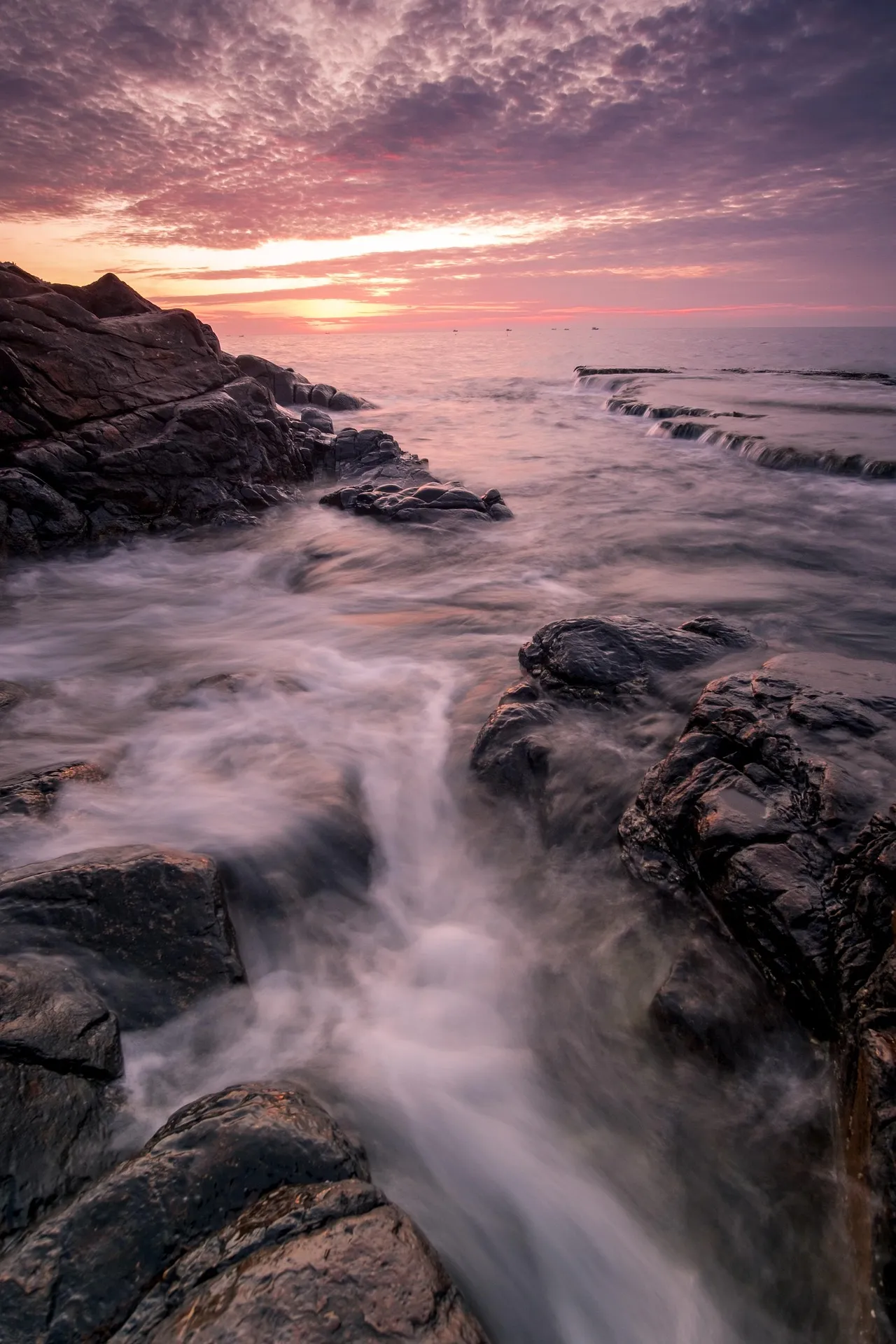
A long exposure keeps the shutter open long enough for movement to blur while still things stay sharp. Waves turn into mist over rocks, car lights become lines, and people walking through a scene can disappear almost completely.
The basics are simple, but each one matters.
A steady camera. Anything longer than a fraction of a second needs a tripod, or at least a solid surface. Use the self-timer or a remote release so pressing the button does not shake the camera. Many photographers also switch off image stabilisation when the camera is on a tripod.
Low ISO and a smaller aperture. Both reduce the light reaching the sensor, which lets the shutter stay open longer and keeps noise down.
ND filters for daylight. In bright conditions even the lowest ISO and smallest aperture are not enough. A neutral density filter cuts the light evenly, so a fraction of a second can become many seconds. Stronger filters can shift colour slightly, which is easy to correct afterwards.
Bulb mode for very long times. Most cameras stop at 30 seconds in normal modes. Beyond that, bulb mode with a remote lets you choose any length.
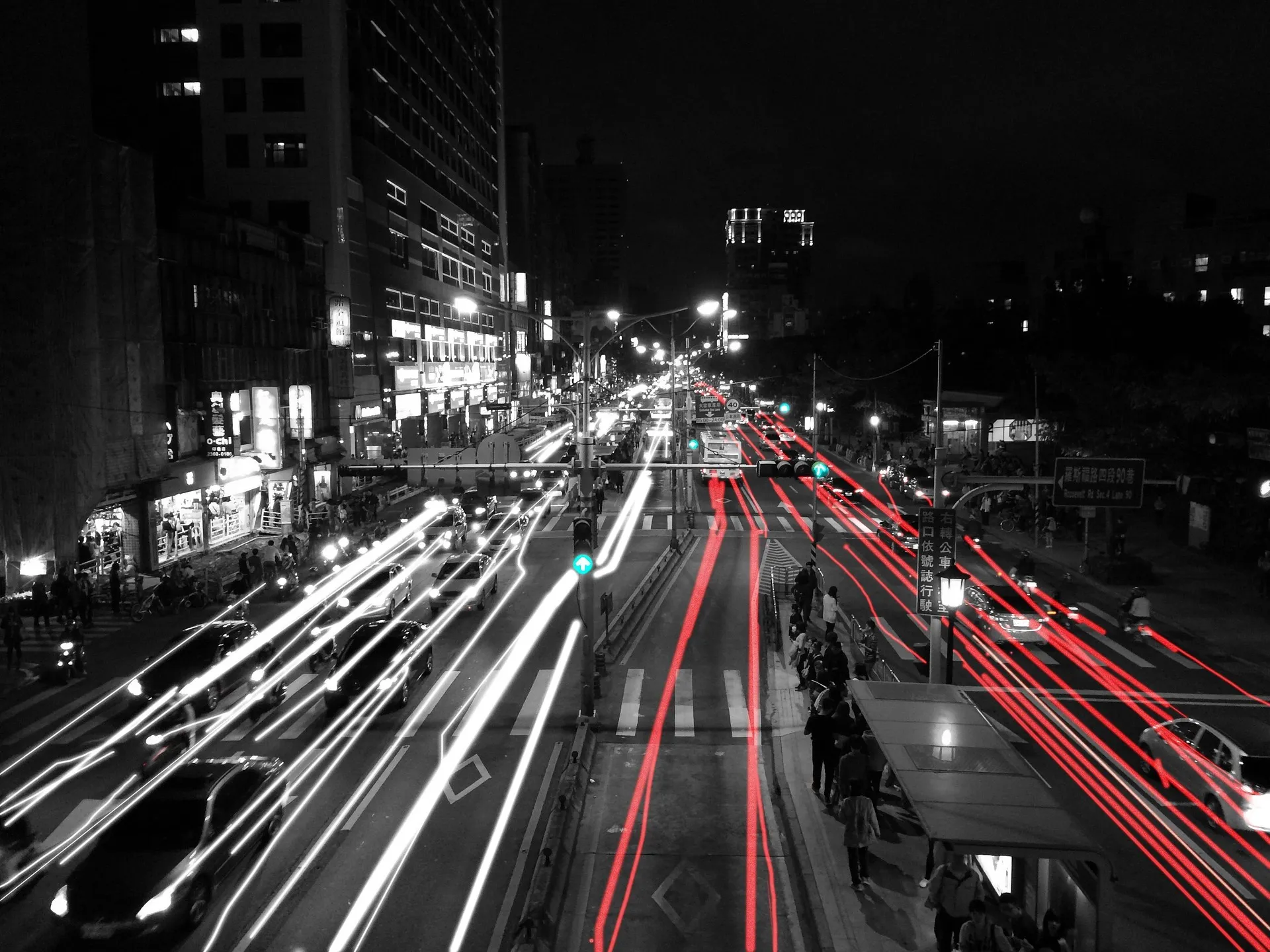
At night, the city does the work for you: traffic provides the moving light, and a few seconds is often enough for clean trails.
One last habit: take a test shot, check the histogram, then adjust. Long exposures are slow, so it pays to get the settings right before waiting.
Photos: kenznguyen, fishopen770 on Pixabay, used under the Pixabay Content License. These are not my photographs.
Related
1 min readNotes
Views: 2A note about the photos on this site
Most images here right now are by other photographers. Here is where they come from and how they are credited.
2 min readNotes
Views: 1Seeing in black and white
Removing colour is not just a filter. It changes what a photograph is about: light, shape, texture and contrast.
2 min readNotes
Views: 0Keeping a research log
A plain, dated record of what I tried, what happened and what I decided. The simplest research habit with the biggest pay-off.

2 min readNotes
Views: 1Reading research papers without drowning
There are always more papers than time. The reading habits that help me decide what to read closely and what to skim.