Hội An, a trading port through the centuries
Before it was a lantern-lit old town, Hội An was a river port where Champa, Japanese, Chinese and European traders passed through. How trade built the town, and how the end of trade preserved it.
A river mouth on the central coast
Hội An sits near the mouth of the Thu Bồn river on Vietnam's central coast. Long before the old town we see today, the area was part of the Champa world, and the river linked the coast with inland centres such as the sanctuary of Mỹ Sơn. Sheltered water close to the sea made it a natural stopping point for ships.
The great age of trade
The port's busiest period came in the sixteenth and seventeenth centuries, under the Nguyễn lords who ruled the south of the country. Ships arrived on the monsoon winds and waited months for the winds to turn, so merchants settled, married and built. Japanese traders formed a quarter of their own, and the covered bridge on the west side of town is traditionally linked to that community and dated to around the early seventeenth century. Chinese merchants, especially after the fall of the Ming dynasty, stayed for good and built assembly halls for communities from Fujian, Guangdong and other regions. European traders knew the town as Faifo.
How the trade ended
Over the eighteenth and nineteenth centuries the river silted up, larger ships needed deeper water, and trade gradually shifted to Đà Nẵng. Hội An became a quiet provincial town. That decline is the reason so much survived: there was little pressure to tear down the old shophouses, wooden ancestral houses and temples. In 1999 the old town was inscribed on the UNESCO World Heritage list as a well-preserved example of a Southeast Asian trading port.
Living with the river
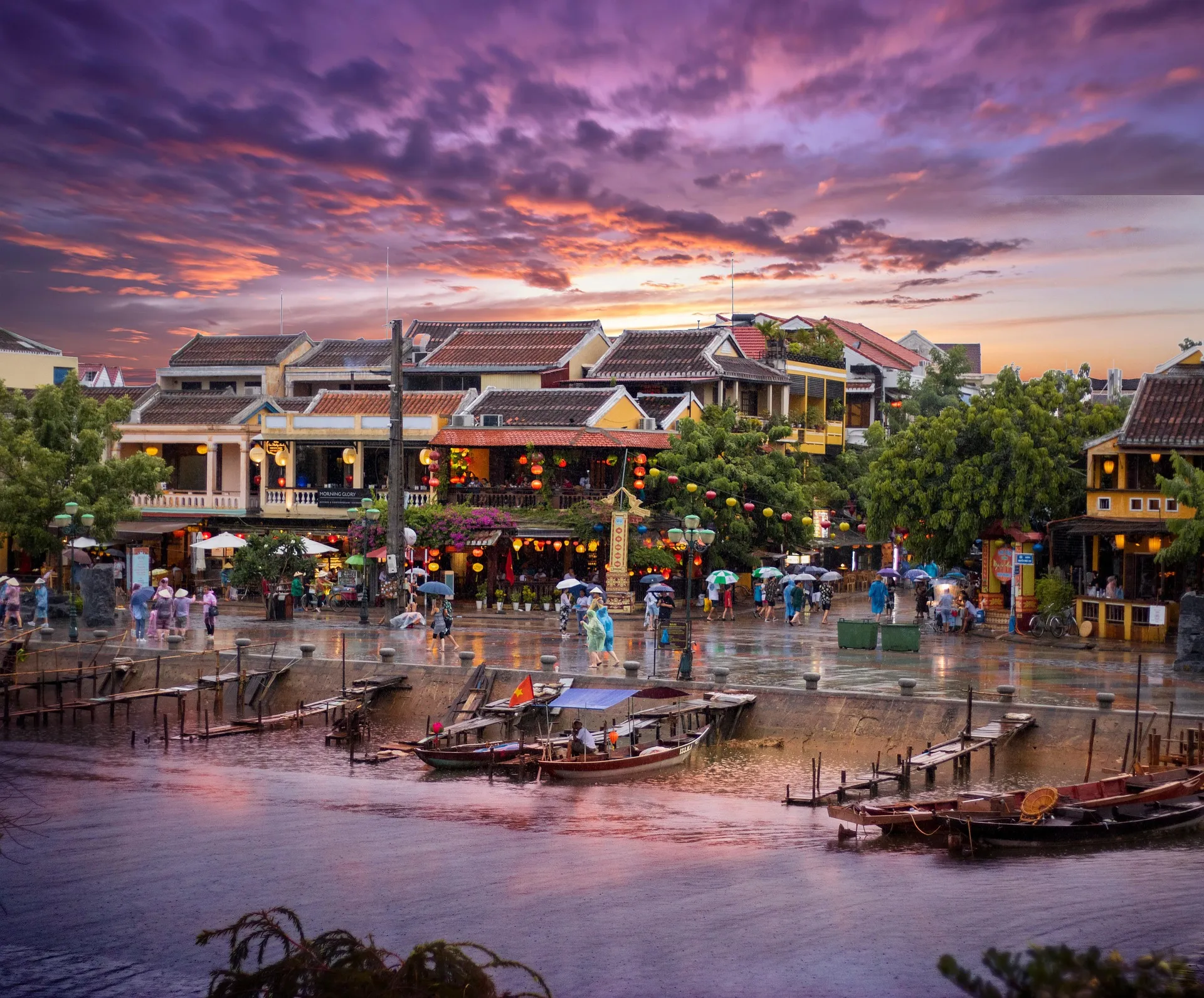
The river that made Hội An also floods it. In the rainy months of autumn, the lower streets near the water are regularly underwater, and many old houses were built with that in mind. Seen this way, the town is less a museum than a place that has kept adapting to water and trade for centuries. What I find most interesting is how a port's mixed past is still readable in its buildings: a Japanese bridge, Chinese halls and Vietnamese houses on the same few streets.
Photos: thuanvo, picart98, pen_ash on Pixabay, used under the Pixabay Content License. These are not my photographs.
Related

5 photos
Views: 0