The rice terraces of northern Vietnam and the people who built them
Terraced fields climb the mountains of the north in curves that follow the land. They are a farming system built over generations by Hmong, Dao, Hà Nhì and other communities, and they change colour with the seasons.
Fields carved from slopes
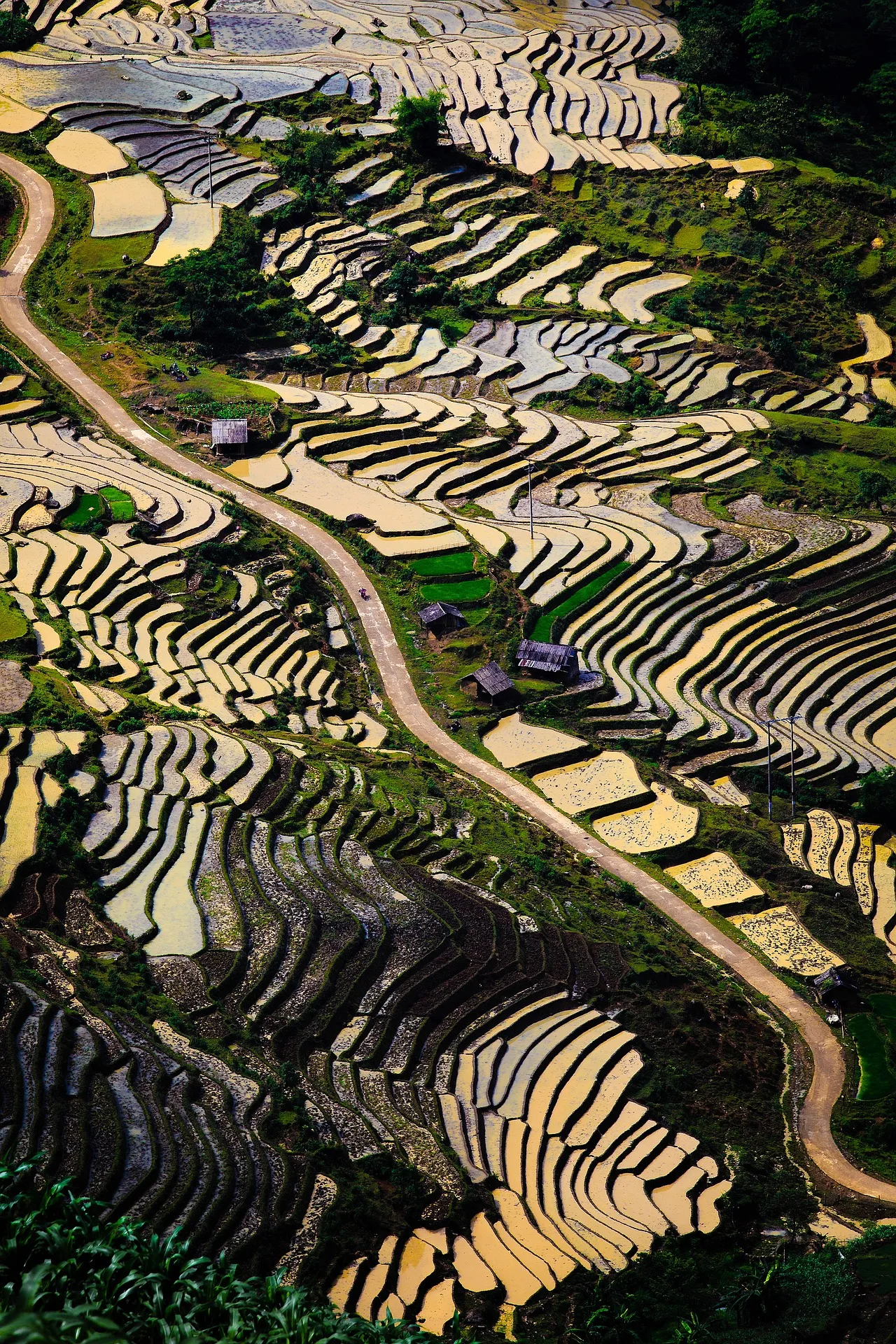
In the mountains of northern Vietnam, flat land is rare. To grow rice on steep slopes, communities carved terraces: narrow, level steps that follow the contours of the hillside, each held up by an earth bank. Seen from across a valley, they look like contour lines drawn by hand. Some of the best-known areas are around Mù Cang Chải, Sa Pa, Y Tý and Hoàng Su Phì, but terraces can be found across the northern highlands.
Who built them
The terraces are associated above all with the Hmong, Dao and Hà Nhì peoples, along with other groups in the region. They were not built in one effort but extended and repaired over many generations. The knowledge they require is practical and collective: how to read a slope, where to cut a channel, how to share water between families downstream.
Water first
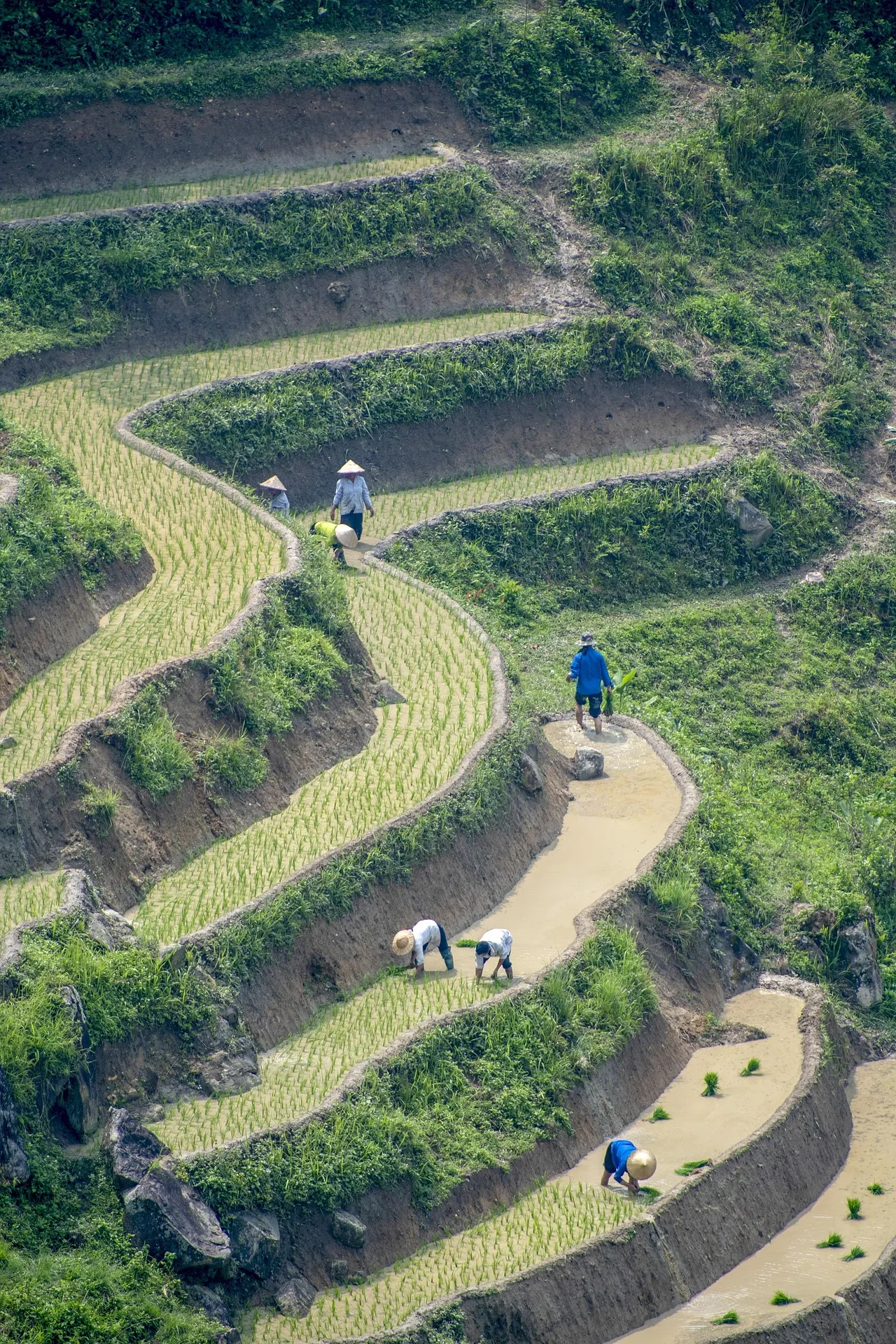
A terrace is really a water system. Streams from the forest above are guided along channels, sometimes through bamboo pipes, and let down from one field to the next. Protecting the forest at the top of the slope protects the water that feeds the fields, which is why many villages treat upland forest with care.
A year in colour
At high altitude there is usually one main rice crop a year, and the terraces change with it. Around late spring and early summer, the fields are flooded and reflect the sky; this is often called the season of pouring water. Transplanting follows, and through summer the slopes turn a deep green. By early autumn the rice ripens and the terraces turn gold before the harvest.
Beyond the postcard
The terraces are now famous with photographers and travellers, which brings income but also pressure on roads, homestays and water. I think the most respectful way to look at them is as working farmland, not scenery: every curve on the hillside is the result of labour, and every harvest still depends on the weather and the people tending the fields.
Photos: minh82bn, dangquangn, nohtnongdan on Pixabay, used under the Pixabay Content License. These are not my photographs.
Related
5 photos
Views: 0